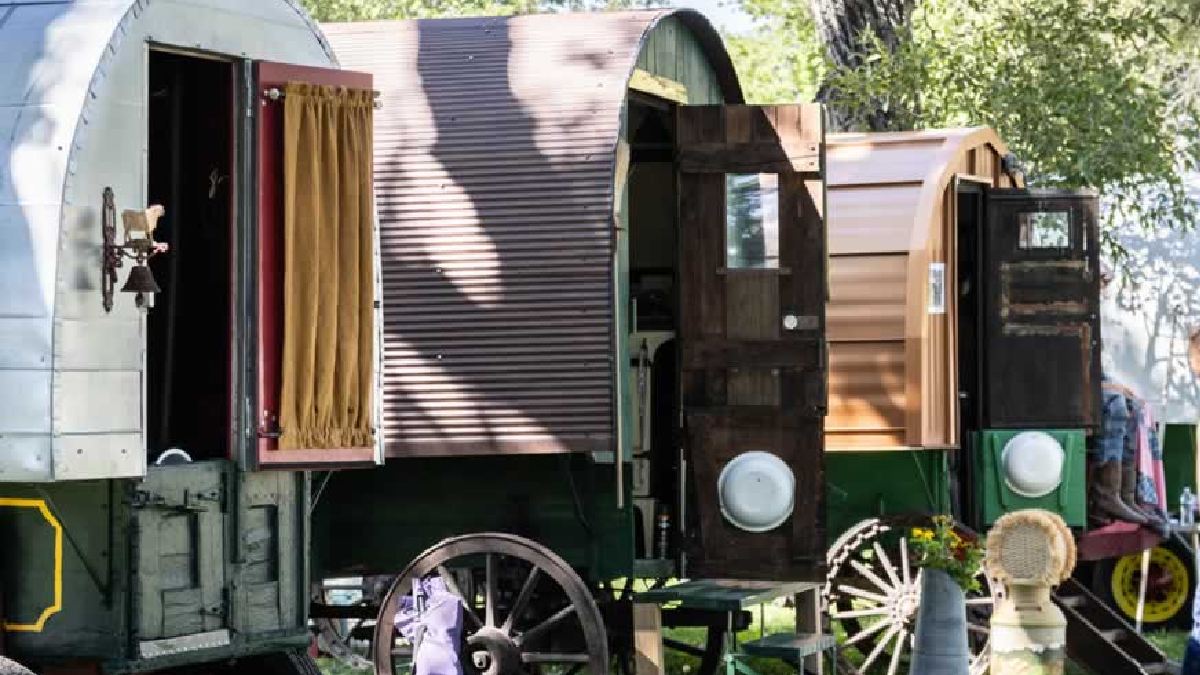
Discover how sheep ranching helped build Converse County.
From vast sheep operations and wool production to historic homes and annual events, the sheep industry played a major role in shaping the Douglas area and continues to influence local culture today.
Although sheep were reportedly introduced to the Converse County area in 1883, the industry did not truly flourish until after the devastating winter of 1886–1887, which severely impacted Wyoming's cattle industry. Sheep proved better suited to the region's ecological conditions, helping stabilize the local economy and fueling the growth of Douglas as a regional agricultural shipping center.
One of the most influential figures in the area's sheep industry was John Morton, who established a large sheep operation near the young town of Douglas in the late 1800s. Along with his brother Jacob Jenne, Morton built one of the most successful sheep enterprises in Converse County. By 1906, the county's sheep population had grown from just over 10,000 animals to nearly 300,000 head.
The success of sheep ranching created considerable wealth in the region. Morton and Jenne invested heavily in Douglas, building impressive Queen Anne-style homes that still stand as reminders of the industry's importance. Morton also served as mayor of Douglas, represented Converse County in the Wyoming Legislature, and invested in numerous local businesses and community projects.
Experience Sheep Ranching History Today
Visitors can still explore this rich agricultural heritage throughout Converse County. The annual Glenrock Sheepherders Rendezvous, held each August in Glenrock City Park, features sheep wagons, vendors, educational demonstrations, and sheepdog trials that celebrate the area's ranching traditions.
During the annual Wyoming State Fair & Rodeo in Douglas, visitors can stop by the Wool Barn to learn about wool production, watch demonstrations, and meet local experts who share the history and importance of Wyoming's sheep industry.
History enthusiasts can also see the Jenne House along the Historic Residences of Douglas Walking Tour and view the impressive John Morton Mansion, which was placed on the National Register of Historic Places in 2001. These historic landmarks provide a lasting connection to the entrepreneurs and ranchers who helped shape Converse County.
Today, sheep ranching remains an important part of the local economy. Producers throughout the county continue a tradition of responsible land stewardship while supplying high-quality wool and lamb products to markets across the country and around the world.